
FOC can deliver high efficiency, but only when the whole system is matched. The propeller is the part people change most casually, and it has the biggest effect on the load your motor and ESC see. This post explains why the propeller and motor have to be chosen together.
The propeller sets the load
A larger diameter or higher pitch propeller needs more torque to spin at a given speed, so the motor draws more current. At a fixed battery voltage, a motor with a given KV settles at an RPM where the propeller’s load balances the motor’s torque. Change the propeller and you change that operating point, along with the current, temperature and thrust.
What goes wrong with a mismatch
- Too much load. Current rises towards the ESC and motor limits, temperatures climb and you lose headroom for manoeuvres. The ESC may limit current to protect itself.
- Too little load. The motor spins fast but produces little thrust, and you carry a larger motor than you need.
- Poor efficiency. Even in the safe range, a propeller far from the motor’s best point gives less thrust per watt, which cuts flight time.
Why this matters more with FOC
A FOC ESC controls torque directly and is tuned to the motor’s characteristics. When the motor and propeller sit in their intended operating range, the control loops behave predictably and efficiency is at its best. Outside it, the controller works harder for less benefit, and you lose the advantages of FOC that you paid for.
How to match them
- Start from the thrust you need per rotor and the battery voltage.
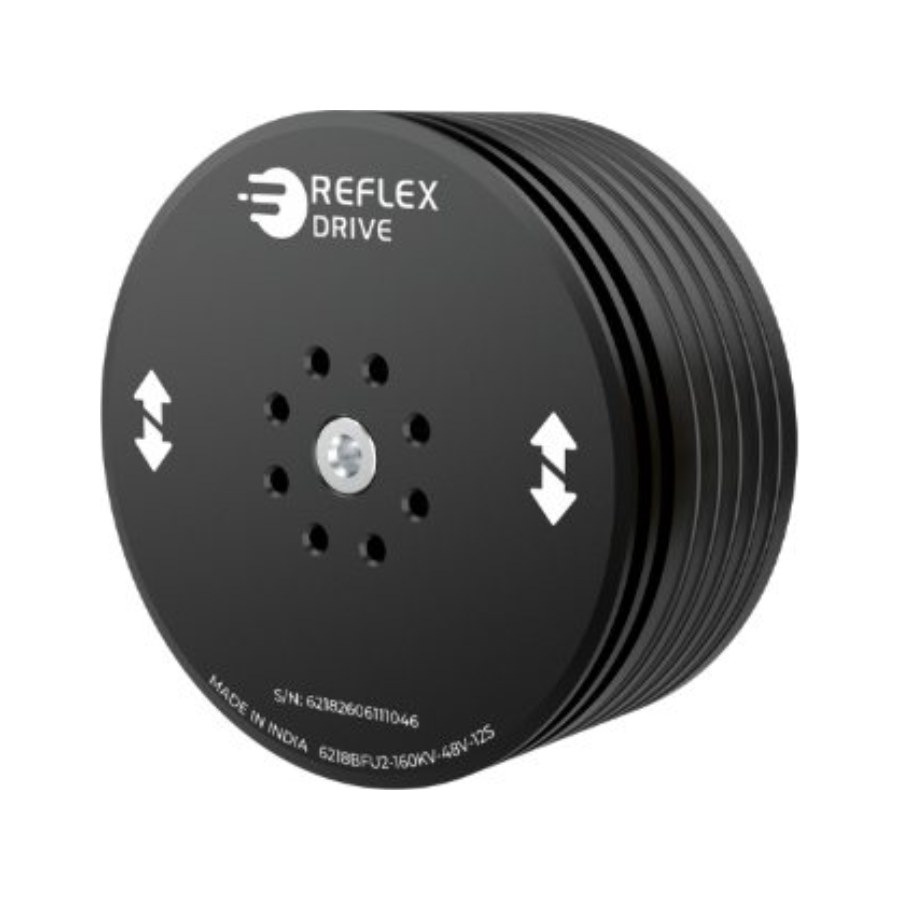
- Use the motor datasheet’s recommended propeller as the starting point. For example, the RD6218 lists the RD 2480 propeller.
- Check that the continuous current at your hover thrust is well under the motor and ESC ratings, and that the peak current at full throttle is within the ESC rating.
- Test on a bench with a thrust stand and watch temperature after several minutes at hover power.
- Change the propeller only if the test shows a problem, and repeat the test.
The guides on choosing a motor and propeller and sizing an ESC cover the numbers in more detail.
An easier route
An integrated propulsion unit ships with the propeller already matched to the motor and ESC, which removes this step.
Talk to our engineers
If you are planning a platform and want help choosing a propulsion setup, email [email protected] or call +91 9151118036. You can also try the Drone Builder to size motors, ESCs and propellers for your aircraft.
