
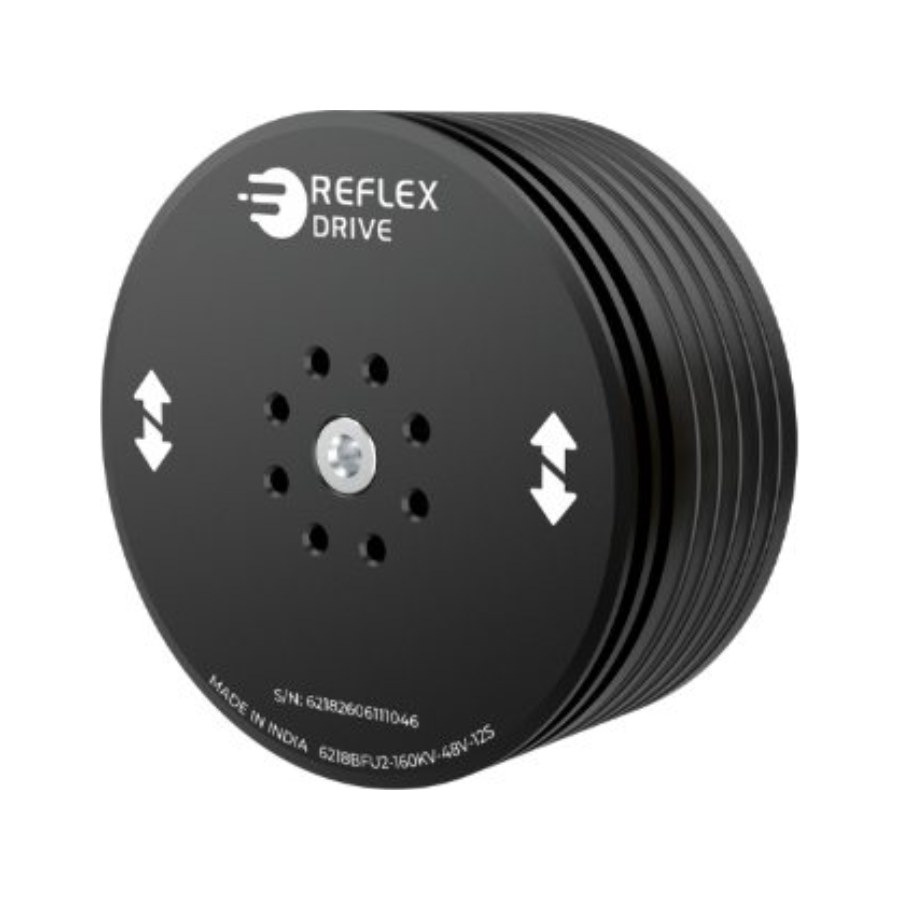
Picking a motor and propeller is the most important decision in a multirotor build, because every other part, from the ESC to the battery to the frame arms, depends on it. This guide walks through the steps we use when helping customers choose a propulsion set.
1. Start with take-off weight
Add up the weight of the whole drone: frame, battery, motors, ESCs, flight controller, payload and wiring. A common rule of thumb is that the total maximum thrust of all motors should be about twice the take-off weight, which leaves margin for climbing, wind and manoeuvring. For a quadcopter, divide the total by four to find the thrust each motor must deliver.
Then compare that figure with the maximum thrust and recommended take-off weight on each motor’s datasheet. Our UAV motors range runs from the RD4006 415KV (1.7 kgf maximum thrust, 69 g) and the RD5008 340KV (3 kgf, 135 g) up to the RD6218 160KV (12.5 kgf, 408 g), the RD8015 115KV (14 kgf, 509 g) and the RD8030 160KV (23 kgf, about 900 g).
2. Choose the battery voltage
For a given power, a higher voltage means lower current. Lower current means thinner and lighter wiring, less heat in the ESC and the motor, and often better efficiency. Small drones usually run on 4S to 6S packs, while heavier platforms move to 12S. The RD7006 230KV is built for 6S, and the RD6218 160KV and RD8030 160KV are built for 12S.
3. Understand KV
KV is the number of revolutions per minute the motor turns per volt with no load. A low KV motor turns a larger, heavier propeller more slowly and is generally better for efficient hovering and endurance. A high KV motor turns a smaller propeller faster and is better for quick response. Our guide to KV and cell count explains the arithmetic.
4. Match the propeller
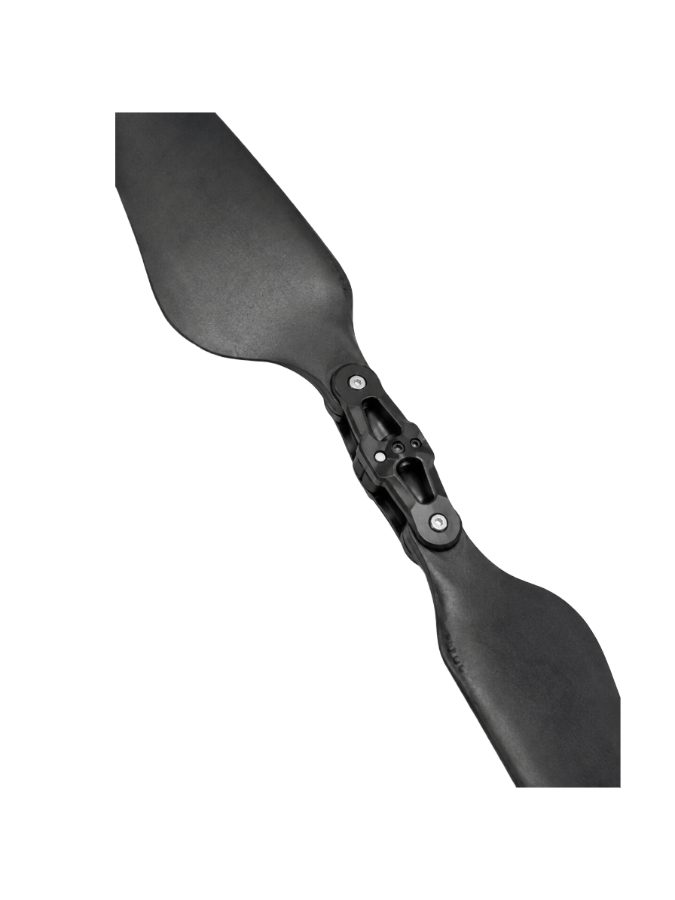
Propeller diameter and pitch decide how much air the motor moves and how much load it puts on the motor. Larger diameters pair with lower KV motors. Our propellers range includes the 15-inch RD 1552 Propeller, the 17.7-inch RD 1760 Propeller, the 24-inch folding RD 2480 Propeller and the 30-inch carbon fibre RD 3090 Propeller. If you are unsure, read folding vs fixed propellers and check each motor’s recommended propeller on its datasheet.
5. Size the ESC
The ESC must handle the motor’s peak current, not just its average. Datasheets list a recommended ESC for each motor. See how to size an ESC for the details, and browse our UAV ESCs.
6. Check the full powertrain
Finally, check that the frame arms can take the thrust, that the power distribution board can carry the total current (see what a power distribution board does) and that the motors have airflow for cooling. If you would rather skip the matching, an integrated propulsion unit bundles the motor, ESC and propeller.
Need help choosing? Email [email protected] with your take-off weight, battery voltage and number of motors, and the Reflex Drive team will suggest a matching set. Reflex Drive is a brand of Sunmint Electronics LLP, and all of our products are designed and manufactured in India.

How KV Rating And Battery Cell Count Work On Drone Motors - Reflex Drive - Drone Propulsion Systems, Made In India
October 27, 2026[…] also means lower current for the same power, which helps with heat and wire weight. For more, see how to choose a drone motor and propeller and browse our UAV […]
Folding Vs Fixed Propellers For Drones - Reflex Drive - Drone Propulsion Systems, Made In India
October 27, 2026[…] 160KV both list the RD 2480 as their recommended propeller. For help selecting the whole set, read how to choose a drone motor and propeller, or browse our UAV […]
FOC Vs Trapezoidal ESC: Which Should You Use? - Reflex Drive - Drone Propulsion Systems, Made In India
October 27, 2026[…] all of our UAV ESCs, or read how to choose a drone motor and propeller to size the full […]