
Two numbers show up on almost every drone motor and battery: the motor’s KV rating and the battery’s cell count (the “S” number). Understanding both makes it much easier to read a datasheet.
What KV means
KV is the number of revolutions per minute (RPM) the motor turns per volt, with no load. It is not a measure of power or quality. A 340KV motor on 22.2 V would spin at roughly 340 × 22.2 ≈ 7,500 RPM with no load. Under load, with a propeller on, the real speed is lower.
What the S number means
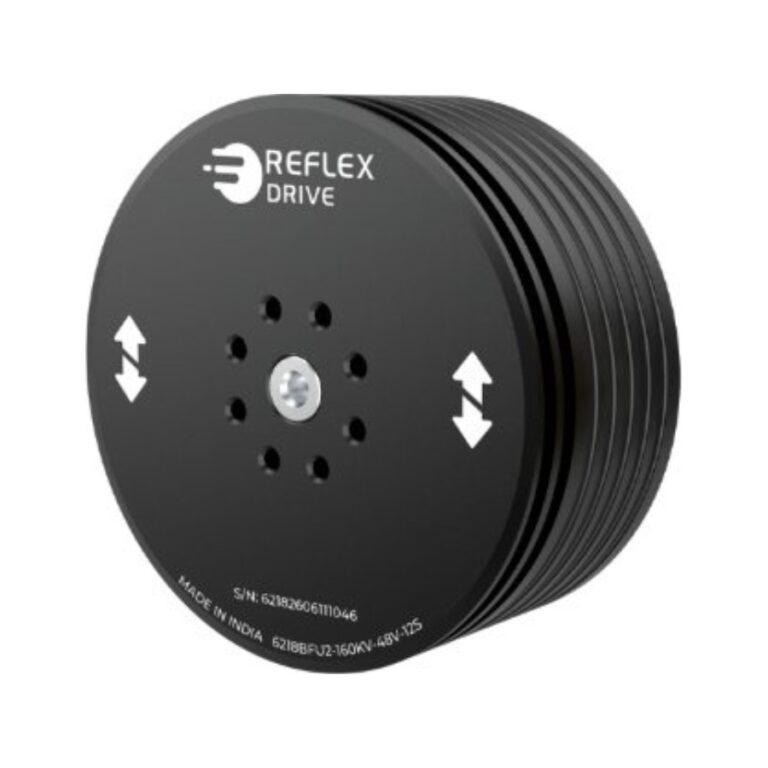
LiPo batteries are made of cells in series. Each cell has a nominal voltage of about 3.7 V and reaches 4.2 V when fully charged. So a 4S pack is around 14.8 V nominal, 6S around 22.2 V nominal (25.2 V full), and 12S around 44.4 V nominal (50.4 V full). Our datasheets use these figures: for example, the RD6218 160KV lists a 12S range up to 50.4 V.
Putting them together
- Low KV on high voltage is common for large propellers and efficient hover. See the RD8015 115KV (115KV, 12S class) and the RD8030 160KV (160KV, 12S).
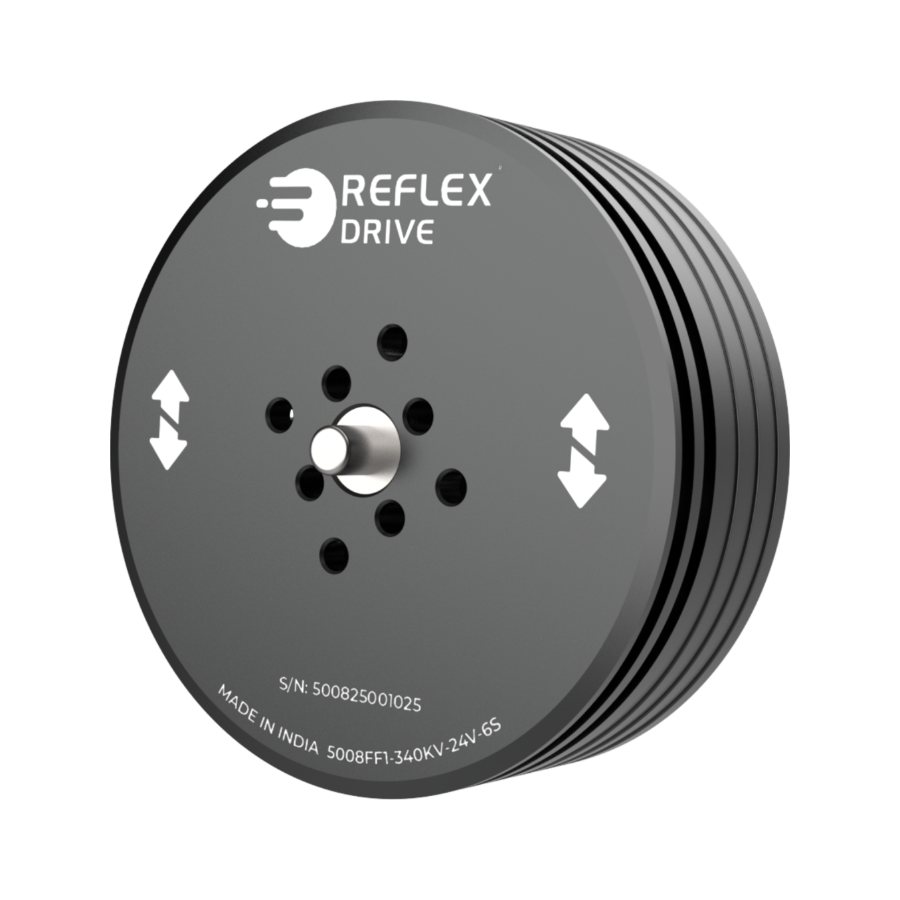
- Medium KV on 6S suits mid-size platforms: the RD7006 230KV (230KV) and the RD5008 340KV (340KV).
- High KV on small propellers gives speed and response: the RD3113 900KV (900KV) and the RD2810 1250KV (1250KV), both for 6S.
Higher voltage also means lower current for the same power, which helps with heat and wire weight. For more, see how to choose a drone motor and propeller and browse our UAV motors.
Need help choosing? Email [email protected] with your take-off weight, battery voltage and number of motors, and the Reflex Drive team will suggest a matching set. Reflex Drive is a brand of Sunmint Electronics LLP, and all of our products are designed and manufactured in India.
